capresso burr grinder manual
Capresso Burr Grinder Manual: A Comprehensive Guide
Welcome! This manual provides detailed instructions for optimal use, maintenance, and troubleshooting of your Capresso burr coffee grinder, ensuring consistently fresh grounds.
Capresso has established itself as a respected name in home coffee brewing, particularly renowned for its high-quality burr grinders. These grinders are designed to deliver a superior coffee experience compared to traditional blade grinders.
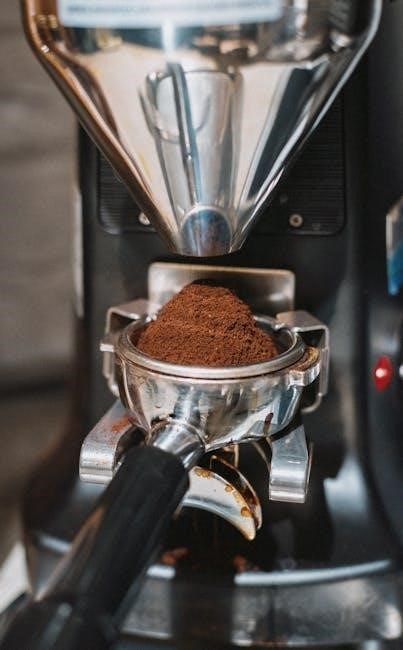
Unlike blade grinders that chop beans inconsistently, Capresso burr grinders mill coffee beans between two revolving abrasive surfaces – burrs. This process preserves the coffee’s delicate aromas and flavors, resulting in a richer, more nuanced cup.
Capresso offers a range of burr grinder models, catering to various budgets and coffee preferences. From entry-level options to more advanced machines, each grinder is engineered for durability and consistent performance. This guide will help you unlock the full potential of your Capresso burr grinder.
Why Choose a Burr Grinder Over a Blade Grinder?
The difference between a burr grinder and a blade grinder is significant, impacting the final flavor of your coffee. Blade grinders essentially “chop” the beans, creating inconsistent particle sizes – some fine, some coarse. This uneven grind leads to uneven extraction during brewing, resulting in bitter and weak flavors.
Burr grinders, conversely, crush beans between two burrs, producing a uniform grind size. This consistency ensures that all coffee particles are extracted at the same rate, maximizing flavor and aroma.
Investing in a burr grinder like a Capresso model unlocks the full potential of your coffee beans, delivering a cleaner, brighter, and more flavorful brew. It’s a crucial upgrade for any coffee enthusiast!
Understanding Your Capresso Burr Grinder Model
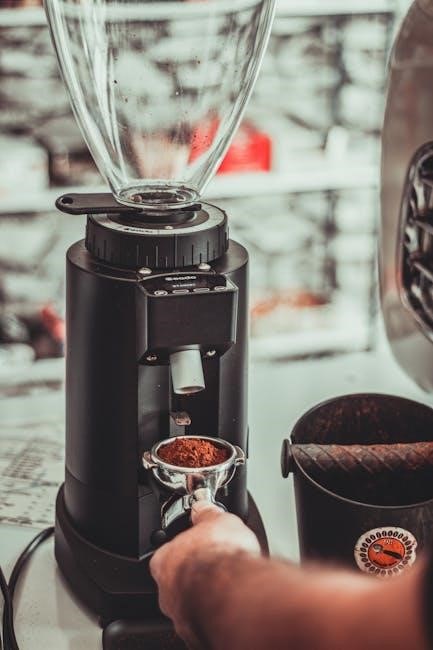
Familiarize yourself with your Capresso grinder! Different models offer unique features; knowing these specifics is key to achieving the perfect grind every time.
Identifying Your Specific Capresso Model (Infinity, Elegance, etc.)
Determining your exact Capresso model is the first step towards utilizing the correct resources and understanding its specific functionalities. Capresso offers a range of burr grinders, including popular lines like the Infinity, Elegance, and UNI.
The model number is typically located on a sticker underneath the grinder base. Common models include the Capresso Infinity Conical Burr Grinder (290.01), the Capresso Elegance Conical Burr Grinder (290.05), and the Capresso UNI Metallic Conical Burr Grinder (290.30).
Each model possesses slight variations in features, such as grind settings, hopper capacity, and timer functions. Knowing your model ensures you access the appropriate troubleshooting guides and cleaning instructions, maximizing your grinder’s performance and longevity. Refer to the original packaging or Capresso’s website for detailed model specifications.
Key Components and Their Functions
Understanding the parts of your Capresso burr grinder is crucial for effective operation and maintenance. The burrs – conical or flat – are the heart of the grinder, responsible for crushing beans uniformly. The hopper holds the whole bean coffee, feeding them into the burrs.
The grind size selector adjusts the distance between the burrs, controlling the fineness or coarseness of the grind. A timer allows for precise dosing, ensuring consistent coffee amounts. The ground coffee container collects the freshly ground coffee.
Finally, the on/off switch initiates the grinding process. Familiarizing yourself with these components and their roles will empower you to optimize your grinding experience and maintain your grinder’s peak performance.
Setting Up Your Capresso Burr Grinder
Prepare for brewing! Properly setting up your Capresso grinder involves initial cleaning, and crucially, adjusting the grind size to your preference.
Initial Cleaning and Preparation
Before your first brew, a thorough cleaning is essential. Remove the hopper and burrs – consult your model’s specific diagram for disassembly. Wash these components with warm, soapy water, ensuring all manufacturing residues are eliminated.
Rinse completely and allow to dry fully before reassembly. Wipe down the grinder’s exterior with a damp cloth. It’s also advisable to run a small amount of inexpensive coffee beans through the grinder and discard them.
This process helps season the burrs and removes any lingering particles from the manufacturing process, guaranteeing a pure coffee flavor from your very first use. Proper preparation extends the grinder’s lifespan!
Adjusting Grind Size – A Detailed Walkthrough
Capresso grinders utilize a stepped or stepless grind adjustment system. For stepped models, rotate the dial to select the desired setting – numbers generally correspond to fineness, with lower numbers being coarser. Stepless models offer infinite adjustments; turn the ring for precise control.
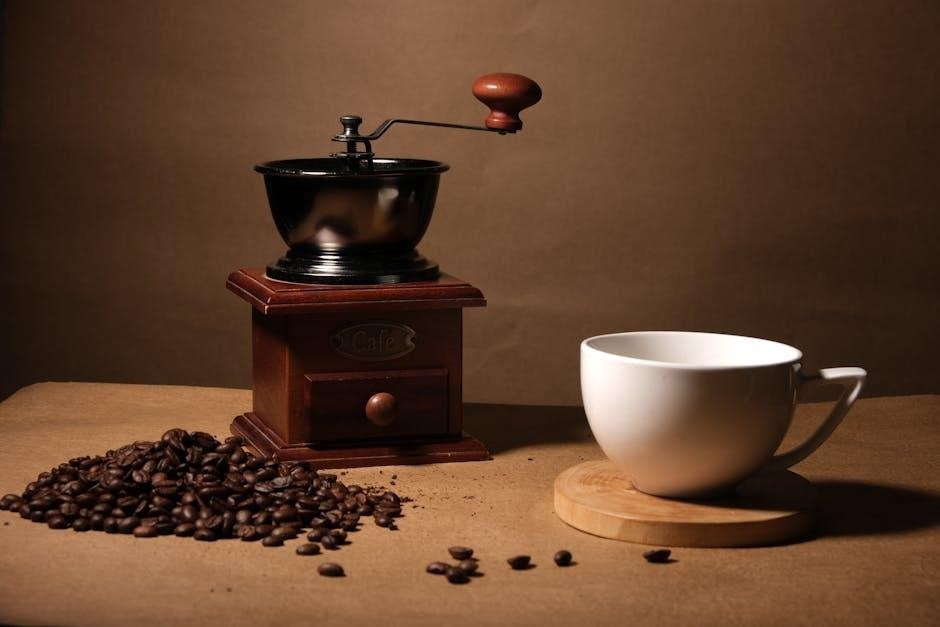
Start with a middle setting and adjust incrementally. A finer setting yields a powder-like consistency, ideal for espresso, while a coarser setting produces larger particles for French press.
Observe the grounds after each adjustment. Small changes significantly impact brew quality. Refer to the brewing method guide for recommended settings, but always fine-tune to your preference!
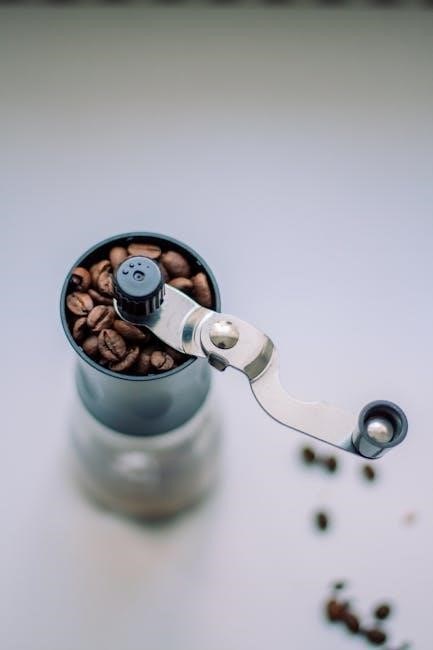
Grinding Coffee: A Step-by-Step Guide
Freshly ground beans are key! Fill the hopper, select your grind size, and activate the grinder for the perfect coffee brewing experience.
Recommended Grind Settings for Different Brewing Methods
Achieving the ideal coffee extraction relies heavily on grind size. Your Capresso burr grinder offers a wide range, allowing precision for various brewing styles. For a French Press, select a coarse setting – resembling breadcrumbs – to avoid sediment. Pour-Over methods benefit from a medium-coarse grind, similar to sea salt, promoting even saturation.
Espresso demands the finest grind, akin to powdered sugar, creating necessary pressure for optimal extraction. Drip Coffee typically uses a medium grind, resembling granulated sugar, balancing flavor and flow rate. Remember these are starting points; adjust based on your taste and specific coffee beans. Experimentation is encouraged to unlock your coffee’s full potential!
French Press Grind
For a truly immersive French Press experience, a coarse grind is paramount. Aim for a consistency resembling breadcrumbs – large, visible particles are key. This prevents grounds from passing through the filter and creating a muddy cup. On your Capresso grinder, begin with the highest numbered setting and adjust downwards incrementally until you achieve the desired coarseness.
A grind that’s too fine will result in over-extraction and bitterness, while too coarse will lead to under-extraction and a weak brew. Observe the grounds; they should be uniform in size. Proper French Press grinding ensures a full-bodied, sediment-free, and flavorful cup of coffee. Don’t be afraid to experiment!
Pour-Over Grind
Achieving the perfect pour-over requires a medium-coarse grind, finer than French Press but coarser than drip. Visualize sea salt – that’s the texture you’re aiming for. Start with a mid-range setting on your Capresso grinder and make small adjustments. A consistent grind is crucial for even extraction during the slow, deliberate pour-over process.
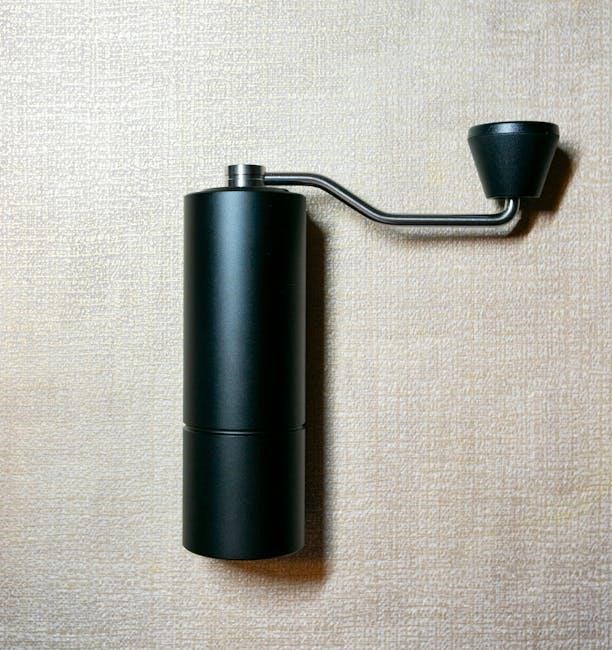
Too fine a grind will clog the filter and result in a bitter, over-extracted brew. Too coarse, and the water will flow through too quickly, yielding a weak and sour cup. Observe the bloom and the flow rate to fine-tune your grind setting for optimal flavor and clarity.
Espresso Grind
For espresso, you’ll need the finest grind setting on your Capresso burr grinder. This consistency should resemble powdered sugar – very fine and almost fluffy. Achieving the correct espresso grind is paramount for proper extraction and crema development. Start with the finest setting and adjust incrementally, as even slight changes significantly impact the shot.
If the espresso pulls too quickly (under-extraction), the grind is likely too coarse. If it drips slowly or not at all (over-extraction), it’s too fine. Dialing in the perfect espresso grind takes practice and patience, but the reward is a rich, flavorful shot.
Drip Coffee Grind
A medium grind setting is ideal for drip coffee makers. The grounds should have a texture similar to coarse sand – visible, but not powdery. This allows for optimal water flow and extraction during the brewing process. Begin with a mid-range setting on your Capresso grinder and adjust based on your coffee maker and personal preference.
If your coffee tastes weak or sour, the grind might be too coarse, leading to under-extraction. Conversely, if it’s bitter, the grind could be too fine, causing over-extraction. Experimenting with slight adjustments will help you achieve a balanced and flavorful cup of drip coffee.
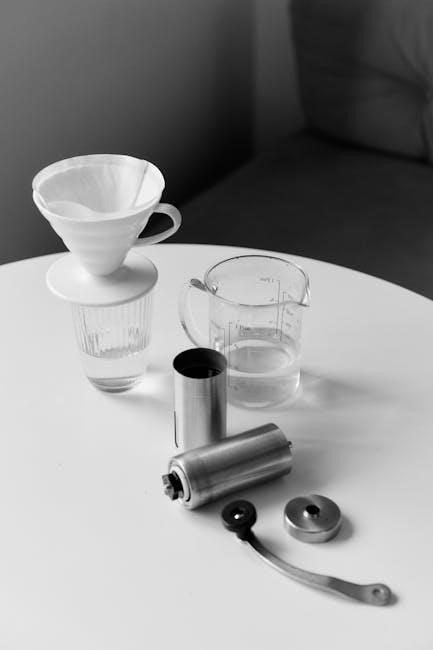
Maintenance and Cleaning
Regular upkeep ensures longevity and optimal performance. Consistent cleaning removes coffee oils and residue, preserving flavor and preventing operational issues.
Regular Cleaning Schedule
Daily: After each use, wipe down the exterior of your Capresso burr grinder with a dry cloth to remove any stray coffee grounds. Empty the grounds container completely. This prevents oils from building up and affecting future brews.
Weekly: Disassemble and wash the clear hopper and the grounds container with warm, soapy water. Ensure they are thoroughly dried before reassembling. A small brush can help remove stubborn grounds.
Monthly: Use a grinder cleaning brush (or a soft paintbrush) to gently remove coffee residue from between the burrs. Do not use water on the burrs themselves. A vacuum cleaner with a brush attachment can also assist in removing loose particles. This maintains grind consistency.
As Needed: Inspect the chute for blockages and clear them with a small brush. Consistent adherence to this schedule will keep your grinder functioning optimally.
Deep Cleaning Procedures (Burrs, Hopper, etc.)
Burr Cleaning (Every 3-6 Months): Carefully remove the burrs (refer to your model’s specific instructions). Use a dedicated burr cleaning brush – never water – to dislodge accumulated coffee oils and fines. For stubborn residue, use a dry toothbrush.
Hopper & Chute (Every 6 Months): Disassemble the hopper completely. Wash all parts with warm, soapy water, ensuring thorough rinsing and drying. Inspect the chute for blockages and clean with a small brush.
Grinder Body (As Needed): Wipe down the grinder body with a damp (not wet!) cloth. Avoid getting moisture near electrical components. Allow to dry completely before reassembling.
Important: Always unplug the grinder before deep cleaning. Reassemble carefully, ensuring all parts are securely in place.
Troubleshooting Common Issues
Facing problems? This section addresses frequent concerns like power failures, inconsistent grinds, and static, offering solutions for a smooth grinding experience.
Grinder Not Turning On
Is your Capresso grinder refusing to power up? Don’t panic! First, ensure the grinder is securely plugged into a functioning electrical outlet. Test the outlet with another device to confirm it’s providing power.
Next, check the grinder’s power switch – sometimes it’s a simple case of an accidentally disengaged switch. Many Capresso models feature a safety interlock; verify the hopper is correctly and firmly attached. The grinder won’t operate if it doesn’t detect the hopper’s presence.
If these steps don’t resolve the issue, inspect the power cord for any visible damage, like cuts or fraying. A damaged cord requires replacement. Finally, if the grinder still fails to start, a thermal overload protector might have tripped – allow it to cool down for 30-60 minutes before attempting to use it again. If problems persist, contact Capresso customer support.
Uneven Grind Size
Experiencing inconsistent coffee grounds? Uneven grind size can significantly impact your brew’s flavor. First, confirm you’ve selected the appropriate grind setting for your brewing method – finer for espresso, coarser for French press.
Ensure the hopper is not overfilled; excessive beans can strain the motor and lead to inconsistent grinding. Also, check for any bean obstructions within the grinding chamber. Regularly cleaning the burrs (see the ‘Maintenance’ section) is crucial, as accumulated coffee oils and fines contribute to unevenness.
Finally, verify the burrs themselves aren’t damaged or worn. If the problem continues despite these checks, consider contacting Capresso support for assistance or potential burr replacement;
Static Cling and Coffee Grounds Mess
Dealing with a sticky situation? Static electricity often causes coffee grounds to cling to the grinder’s interior and create a mess. Humidity plays a significant role; drier environments exacerbate static. Try grinding slightly coarser, as finer grounds generate more static.
Before grinding, you can lightly mist the beans with a few drops of water – be careful not to saturate them! This increases humidity and reduces static. Regularly wiping down the grinder’s components with a slightly damp cloth helps remove residual oils that contribute to static buildup.
Consider using an anti-static brush specifically designed for coffee grinders to dislodge clinging grounds. Proper grounding of the grinder can also minimize static electricity.
Advanced Techniques & Tips
Elevate your brewing! Fine-tune grind size incrementally, experiment with single-dosing, and consistently assess your results for peak coffee flavor extraction.
Optimizing Grind Consistency
Achieving uniform grounds is crucial for balanced extraction and superior coffee flavor. Regularly calibrate your Capresso grinder by observing the grind size distribution. Small adjustments to the grind setting can significantly impact consistency.
Ensure the hopper is adequately filled – too little can cause inconsistent feeding. Avoid overloading, as this can strain the motor and affect grind quality.
Consider “purging” the grinder before each use by running it briefly to clear any residual grounds from the previous grind. This minimizes mixing of different grind sizes. Inspect the burrs periodically for any buildup or damage, as this directly impacts consistency. A clean grinder equals a consistent grind!
Storing Your Capresso Burr Grinder
Proper storage preserves your Capresso grinder’s performance and longevity. Before long-term storage, thoroughly clean the grinder, removing all coffee oils and residue – this prevents rancidity and clogging. Ensure all parts are completely dry before reassembly.
Store the grinder in a cool, dry place, away from direct sunlight and humidity. A cabinet or pantry is ideal. Avoid storing it near strong odors, as the plastic components can absorb scents.
If possible, store it in its original packaging for added protection. Periodically check the grinder during storage to ensure no moisture has accumulated. A well-stored grinder guarantees fresh coffee for years!